Silver Buffaloberry
Silver Buffaloberry
Couldn't load pickup availability
Silver Buffaloberry is a hardy native shrub with attractive silvery foliage, small flowers, and bright red berries. It is a tough and adaptable plant, growing in a range of soils from sandy and loamy to clay and gravel, and tolerating both dry conditions and occasional flooding. It performs best in full sun, although it can tolerate some partial shade. Like other members of the Elaeagnaceae family, it forms a beneficial relationship with nitrogen-fixing bacteria in its root nodules, allowing it to capture atmospheric nitrogen and enrich the soil.
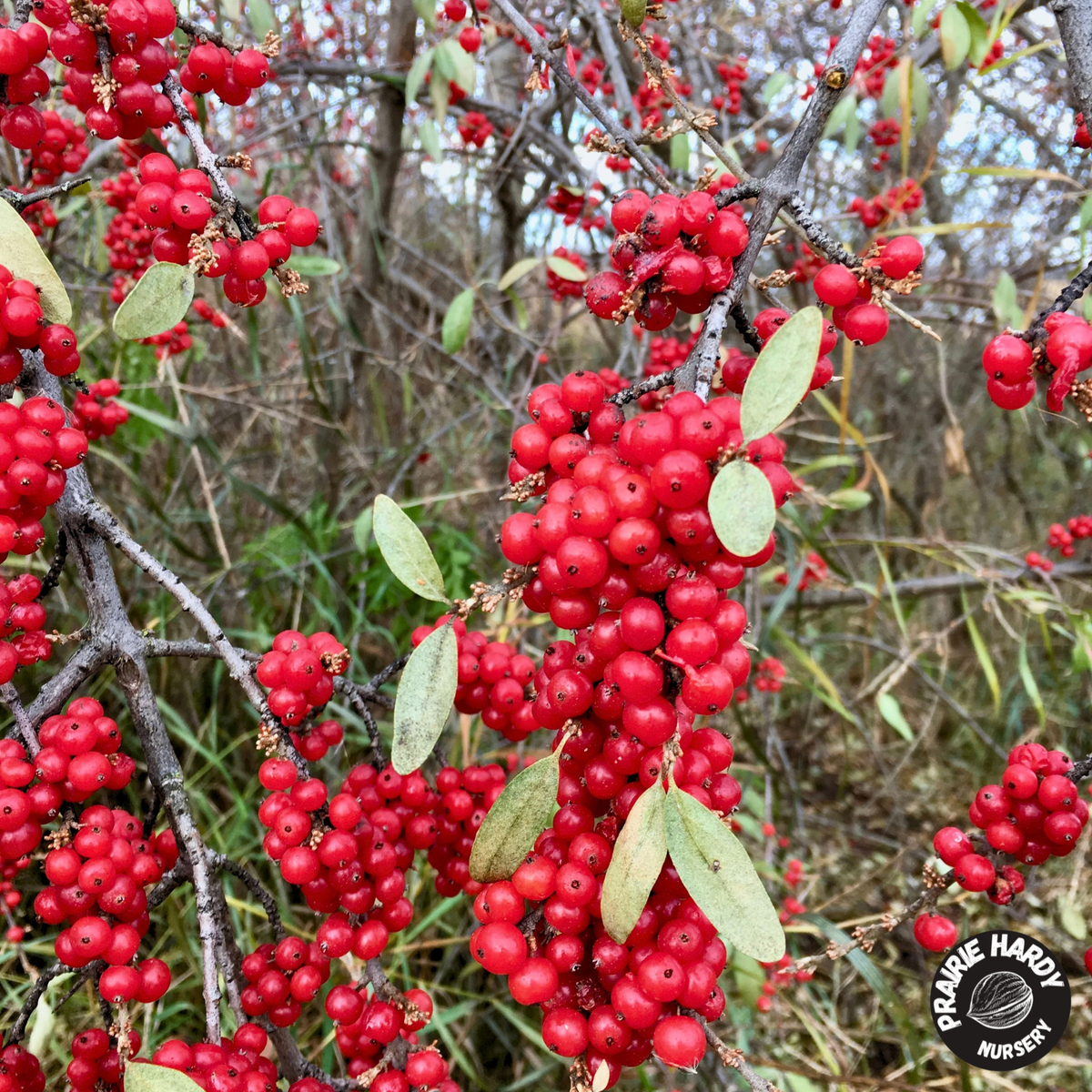
The small, oval berries grow up to 1 cm and ripen in late summer becoming bright red, forming compact clusters along the branches. While they can be eaten fresh, most people find them too tart and sour for raw consumption. They are better suited for cooking into jams, jellies, pies, and sauces, or for drying.
With its dense, thorny branches and tendency to form thickets, Silver Buffaloberry provides excellent cover and nesting habitat for wildlife. Its nitrogen-fixing ability also makes it a valuable plant for improving soil fertility and supporting diverse plantings. The fruits are enjoyed by birds, while the shrub also provides browse for deer and other wildlife. It is a useful choice for naturalized gardens, shelterbelts, riparian restoration, and biodiversity-focused landscapes.
One important consideration when growing Silver Buffaloberry is that the species is dioecious, meaning male and female flowers occur on separate plants. Female plants require a male plant nearby for pollination and reliable fruit production. As our trees are unsexxed, it is best to plant several together, as this increases odds of having both male and female plants, to encourage good pollination and fruit set.
Hardiness Zone: 2
Height at Maturity: 4 meter (13 feet)
Spread: 2.5 meter (8 feet)
Soil Preference: Well drained
Light Exposure: Full sun
Pollination: Dioecious (Need both male and female plants together for reliable pollination)
Latin Name: Shepherdia argentea
Share